
Here’s the honest answer: most full weddings fit well into eight or ten hours. Choose eight when the day is fairly compact. Choose ten when locations, traditions or the moments you care about stretch the story at both ends.
Start with the moments. Then count the hours.
Write down the first moment you genuinely want photographed and the last one you’d hate to miss. Maybe that’s getting dressed through the first hour of dancing. Maybe it’s quiet morning prep through a late-night tradition.
The hours between those two moments are the real starting point. Travel, separate getting-ready locations, a ceremony-to-reception gap and a long family-photo list all live inside that time. They don’t pause the clock just because nobody is cutting a cake.
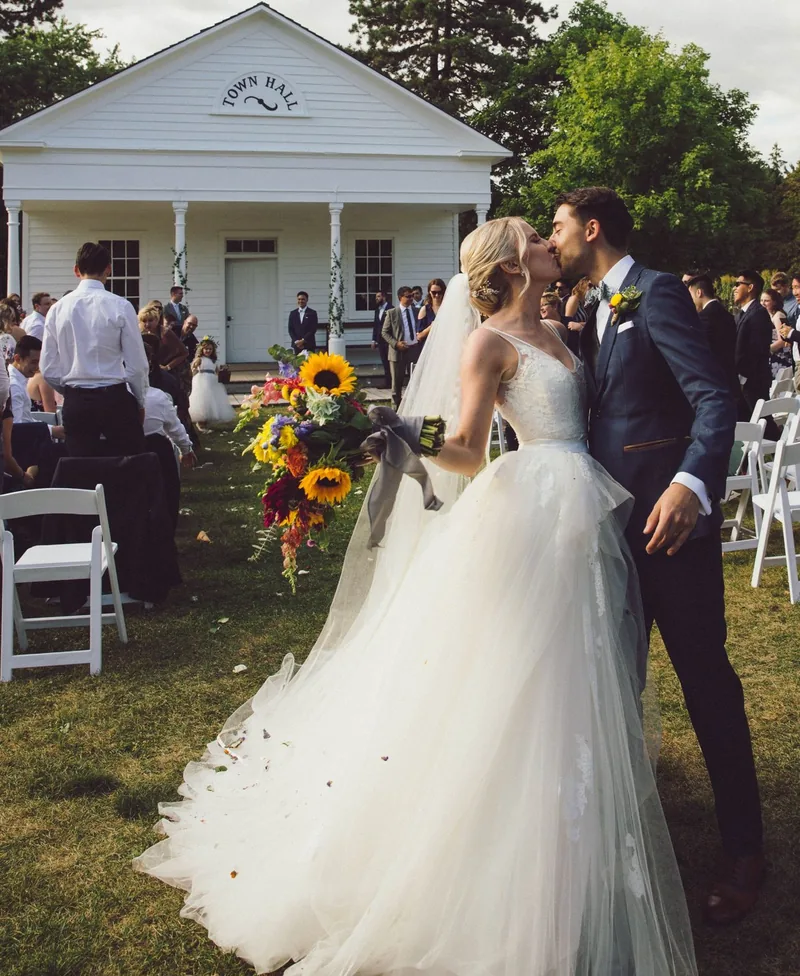
Eight hours is enough for many weddings.
Eight hours works well when getting ready, the ceremony and the reception are close together, the formal photo list is sensible and the key reception moments happen without a long gap.
Eight hours usually fits when:
- Most of the day happens at one venue or nearby locations.
- You want the final part of getting ready, not every curling iron and coffee.
- The ceremony and reception flow into each other.
- Speeches, first dances and the party begin early enough to photograph.
What an eight-hour day can look like.
This is an example, not a template your wedding has to obey.
- Final prep + detailsClothes on, finishing touches and the people in the room.
- First look + portraitsA calm start before guests arrive.
- CeremonyThe part you’re actually here for.
- Family + wedding partyOrganized without turning cocktail hour into detention.
- ReceptionEntrance, dinner, speeches and the room around you.
- First dances + partyEnough dance floor to remember what it felt like.
- Coverage endsEight hours, from the last part of prep through a real piece of the party.
Ten hours buys breathing room, not just more photographs.
Extended Day makes sense when the day starts meaningfully earlier, ends meaningfully later or moves enough that eight hours would require cutting something you care about.
Ten hours earns its keep when:
- You’re getting ready in two places or travelling between venues.
- Your ceremony has cultural or religious traditions that need time.
- There’s a large gap between the ceremony and reception.
- You want both the quiet beginning and the full dance-floor energy.
What a ten-hour day can look like.
This example adds room for travel, traditions and a later finish without rushing the parts between them.
- Both stories beginFinal prep, details and the people in each room.
- First look + portraitsTime together before the day starts moving.
- Ceremony + traditionsRoom for the full ceremony without watching the clock.
- Travel + family photographsA location change and the important groups, calmly organized.
- ReceptionEntrance, dinner, speeches and the people around you.
- First dances + late momentsThe traditions that happen after dinner still make the story.
- Dance floorEnough celebration to remember the energy, not just the first song.
- Coverage endsTen hours, with the early story and the late energy both intact.
What eats time faster than people expect.
Travel
Twenty minutes between three places is an hour that can’t also be used for photographs.
Large groups
Family photographs move quickly when the list is focused and everyone knows where to be.
Separate locations
Two photographers help, but distance still shapes when everyone has to move.
Late reception moments
If speeches, dances or traditions happen late, the coverage has to reach them.
More hours aren’t automatically better. Enough hours—with room for the day to be human—are better.
Adding film shouldn’t turn the day into two productions.
Photography and wedding-film coverage happen together. The team plans around the same moments so you aren’t asked to repeat the day for a second camera.
The same timeline question still applies: what do you want remembered, how far does the day travel and when does the last meaningful moment happen? You can compare photography and video coverage without choosing anything first.
The quick answer.
Choose 8 hours if…
Your day is compact, the key events flow together and you want focused coverage from final prep into the party.
Choose 10 hours if…
Your day moves, has a long gap or carries meaningful moments at both the early and late ends.
Still unsure? That’s normal. Send me the rough timeline and I’ll tell you what I’d choose—and whether the extra two hours would actually help.
Tell me the date. I’ll help with the hours.
Share what you know about the day. I’ll confirm availability and give you a straight answer, usually within one business day.
Check Your Date